Introducing Backfield
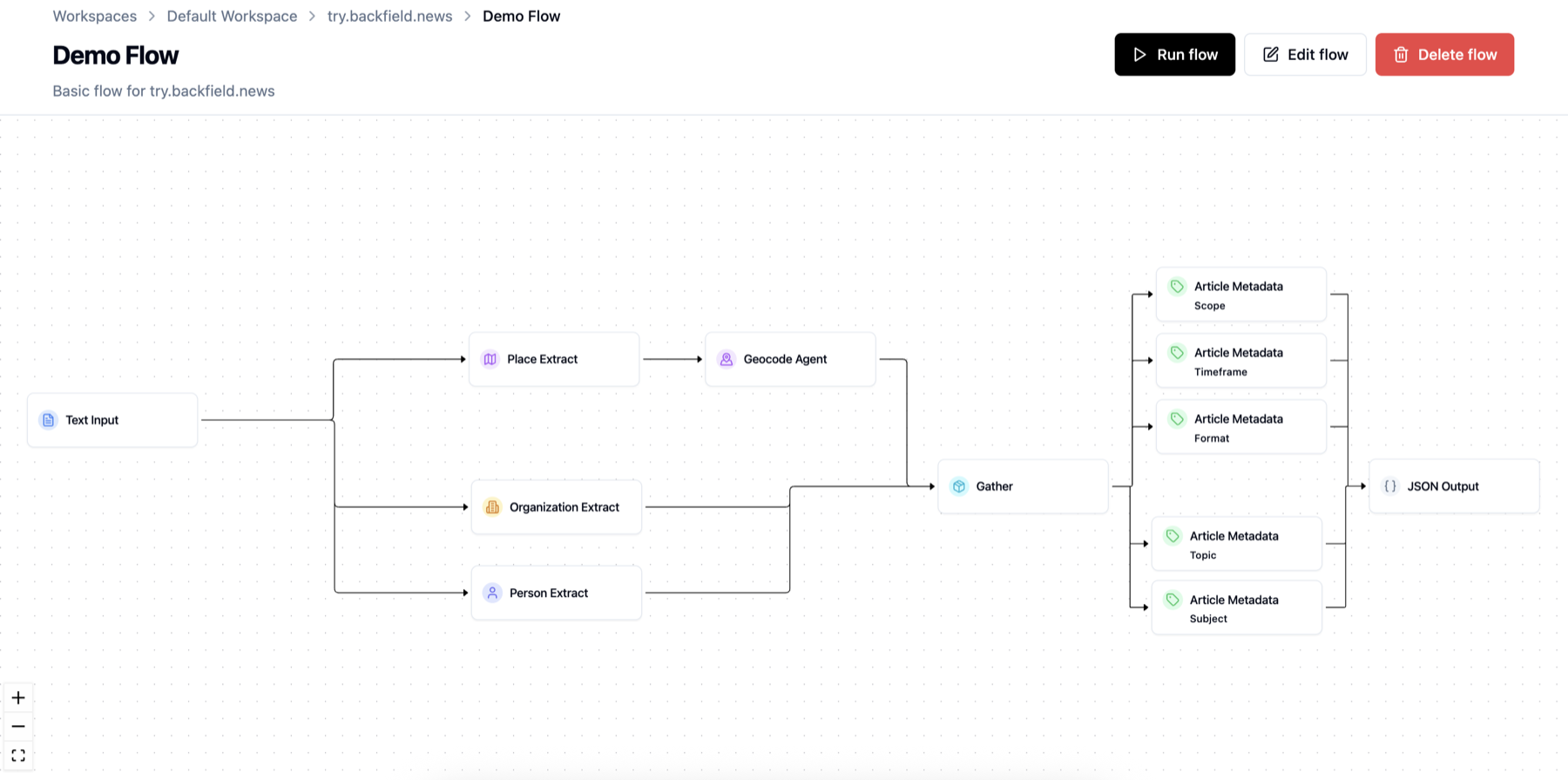
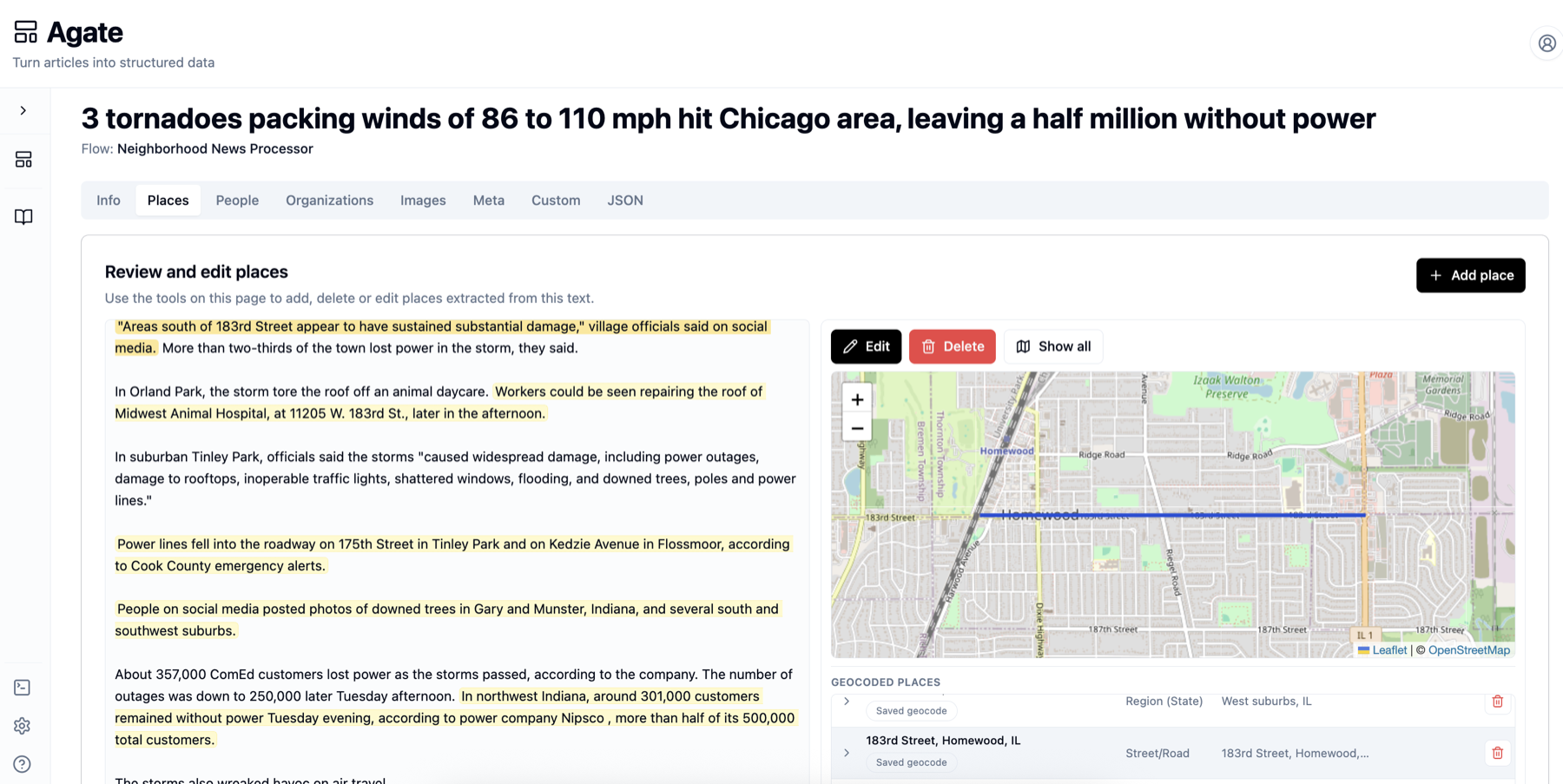
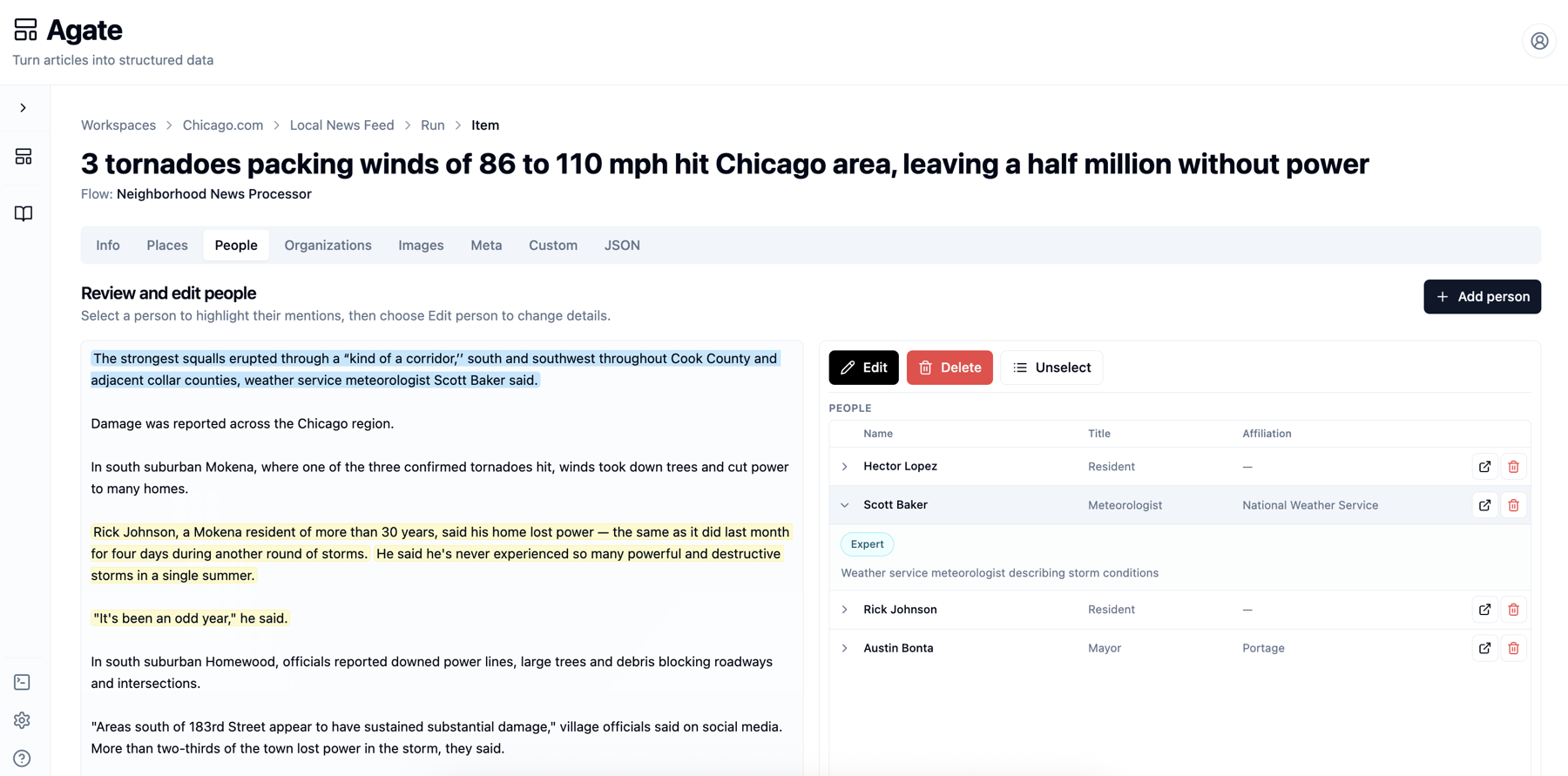
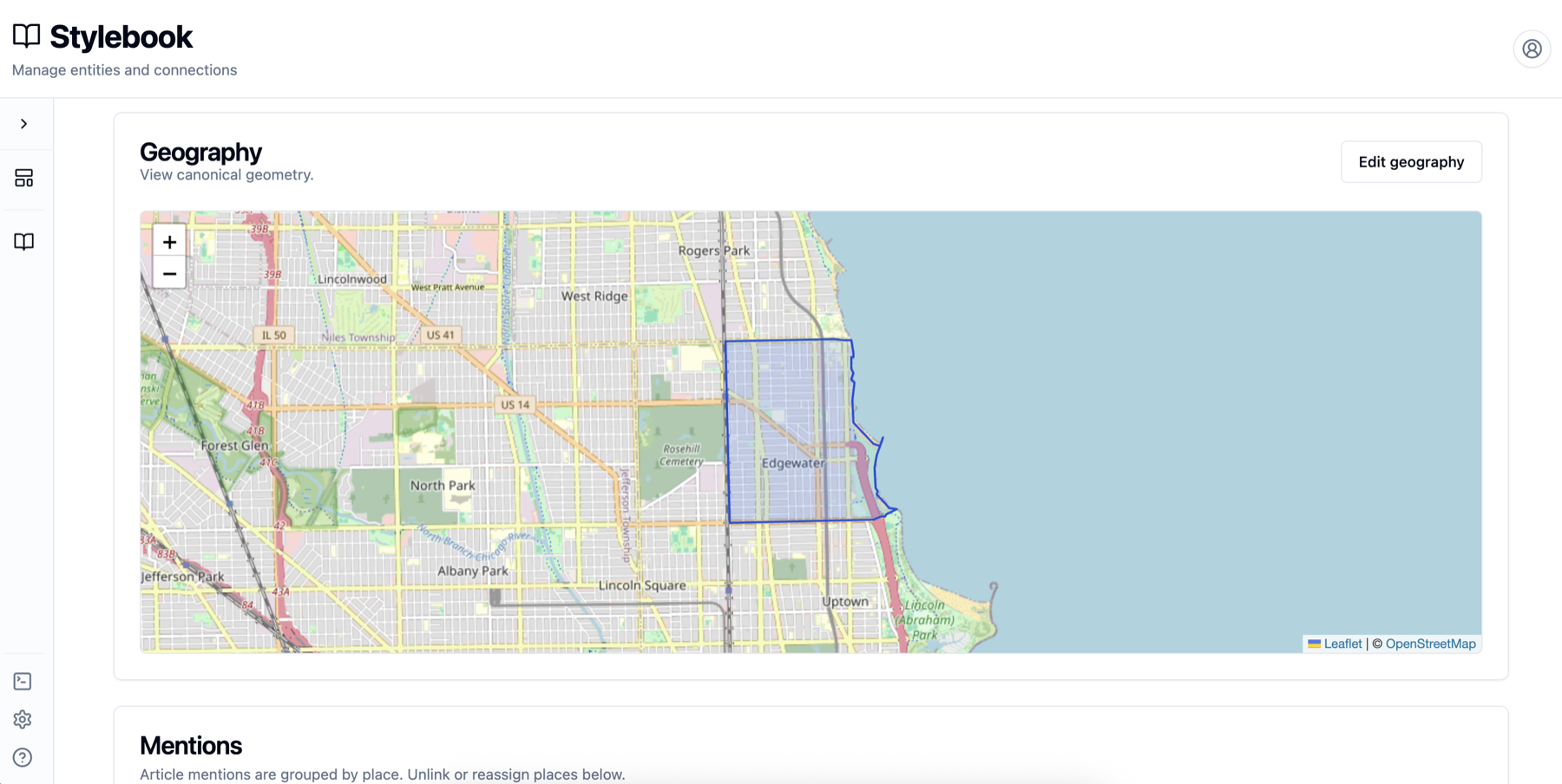

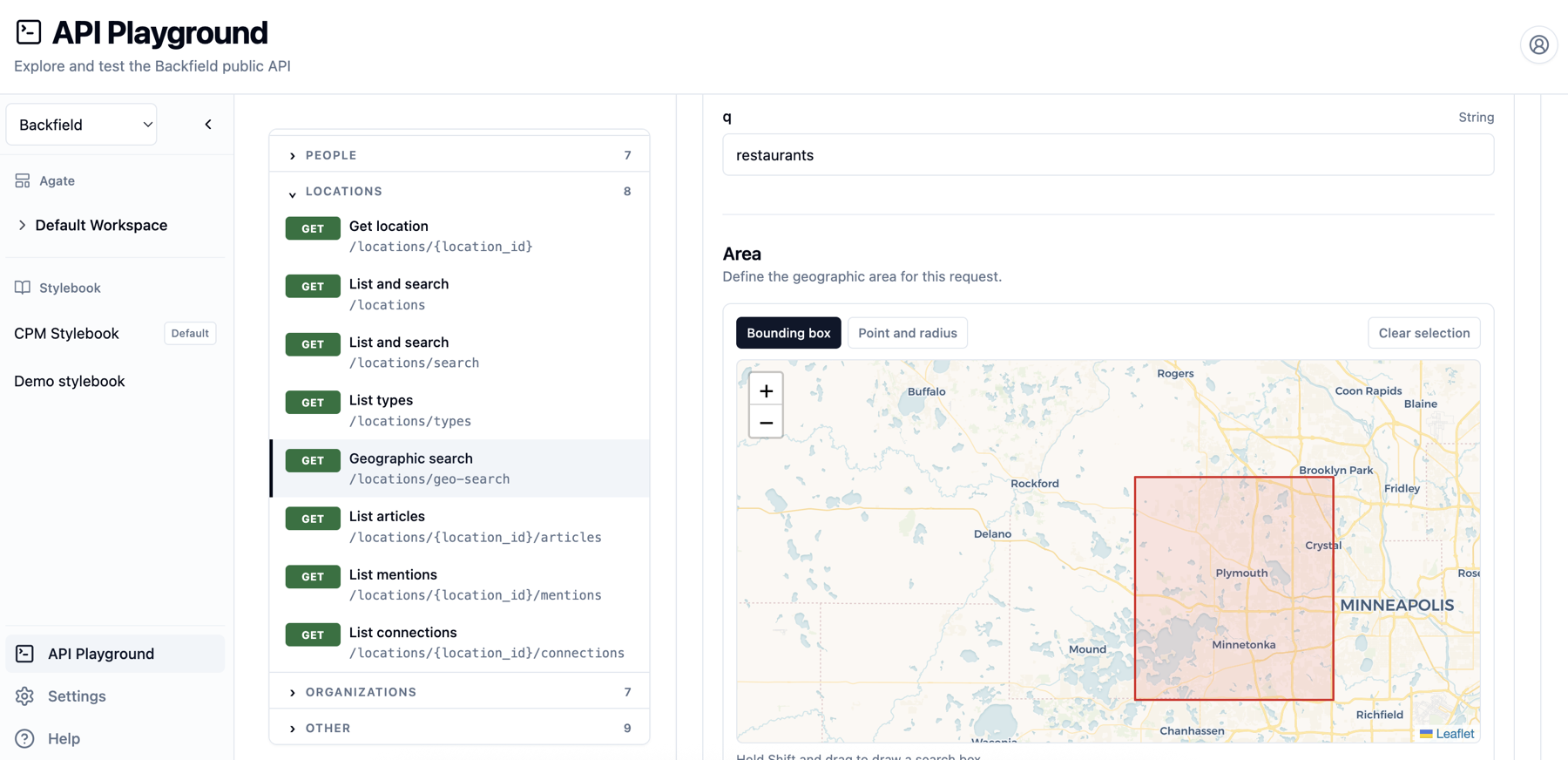
Today Local Angle is launching Backfield, an open-source platform that turns journalism and civic information into structured data you can build with.
What kind of data? It’s really up to you. Out of the box, Backfield can recognize and geocode editorially relevant locations; identify people and extract their quotes; extract organizations like companies, sports teams and government agencies — and connect them to the people who work there.
It can tag articles with custom taxonomies, such as topics and user needs. It generates semantic embeddings so articles can be searched by meaning, not just keywords. And it can extract custom features from different article types: think ingredients from recipes, scores from sports stories, or times, dates and mapped locations from events roundups.
That data can be used in countless ways: to create new products, to enrich analytics, and to personalize coverage to an unprecedented degree.
Data from Backfield can turn an archive of restaurant reviews into an interactive map, or years of political coverage into a searchable record of what elected officials have said and done. When a story mentions an elected representative, Backfield data can be used to surface it to their constituents — even if nothing in the headline suggests the story might be relevant to them.
Fundamentally, Backfield is built on the idea that structured journalism holds new value in the era of generative AI. Partly that’s because large language models make it practical to produce structured data at scale in a way that conforms to journalism’s norms and standards. That simply hasn’t been possible before.
But more importantly, structure offers a way to combine the complementary strengths of AI and human journalists. Models are excellent at reading huge amounts of text and doing the tedious work of extracting, classifying and connecting information. But deciding what counts as newsworthy, how things should be categorized and which distinctions matter to a community requires editorial judgment. Backfield uses generative AI for the former while leaving the latter where it belongs: in the hands of journalists.
In a business landscape where news organizations are increasingly focused on creating direct relationships with readers and demonstrating unique value to communities, that feels important.
Newsrooms produce enormous amounts of useful information every day, but much of it is buried deep within stories, where readers struggle to find it. Once that reporting is structured, it can be surfaced, recombined and delivered in ways that are much more specific to the people and communities a newsroom serves.
Local Angle has been building Backfield alongside working news organizations, collaborating with journalists and technologists to refine the platform and using it to build an array of tools, prototypes and experiments that explore what structured journalism at scale can accomplish — for both mission and business.
We open sourced some of the early ideas at the Minnesota Star Tribune in early 2025, supported by the Lenfest AI Collaborative and Fellowship Program. The concept was further refined through work with Chicago Public Media and the Reynolds Journalism Institute, eventually maturing into the platform being released today.
The full Backfield platform is available on GitHub under an Apache 2.0 license. Anyone can download and run it by following the setup instructions in the repository. Backfield remains in active development, and feedback and contributions are welcome.
A hosted version is also available in private beta for organizations interested in deploying it without the technical challenges of self-hosting. If you or your organization are interested, sign up for the waitlist.
If you’d like to learn more, you can read more about Backfield here, try a demo or browse the documentation.
And if you’re interested in discussing what Backfield or structured journalism can do for your organization, reach out to backfield@localangle.co.